
With Microsoft Gaming CEO Phil Spencer retiring and Xbox President Sarah Bond announcing her resignation, many industry analysts and gamers are struggling to understand what this means for Xbox.
The executive shakeup and the appointment of Asha Sharma—an executive from Microsoft’s AI divisions stepping in to lead gaming initiatives—have left many open questions. Analyst opinions run the gamut: some claim “this is officially the end of Xbox,” while others argue “this is Microsoft bringing the Xbox brand back!” Consequently, it is difficult to pin down exactly what the future holds for the console, Game Pass, and future Xbox initiatives. One thing is certain: the entire concept of a “console war,” which has been a pillar of the gaming business since the industry’s inception, has finally ended. Or has it?
Taking Stock of the Big Three
Sony has clearly won not just this generation, but the console wars in general. The PlayStation 5 (and the PlayStation 4 before it) outsells Microsoft’s Xbox at a rate of 10-to-1. While many gamers cite the lack of exclusive titles as the reason for this—noting that Microsoft now ports its games to other consoles and PC—the reality is that Sony slew the giant back in 2013. This occurred during the simultaneous E3 press conferences where both companies revealed the PlayStation 4 and the Xbox One. We will dive into that in a moment. Needless to say, the disastrous press conference on that fateful day destroyed Microsoft’s ability to remain competitive in the space.
Meanwhile, Sony led the market throughout the end of the PS3 generation and the entire PS4 era with massive AAA blockbusters that became cultural milestones. Everyone talked about Uncharted, The Last of Us, and God of War. These games existed only on PlayStation, and many garnered critical reception that placed them among the best games ever made. Sony was at the top of its game, literally.
However, the PS5 generation finally revealed cracks in Sony’s plans as development costs skyrocketed. Sony now simply cannot create games fast enough. Even so, Sony holds some of the most valuable IP in the world, comparable in some regards to Disney’s massive holdings. Yet, in terms of sheer IP value, Sony still lags behind the elephant in the room.
Nintendo Wins by Doing What It Does Best
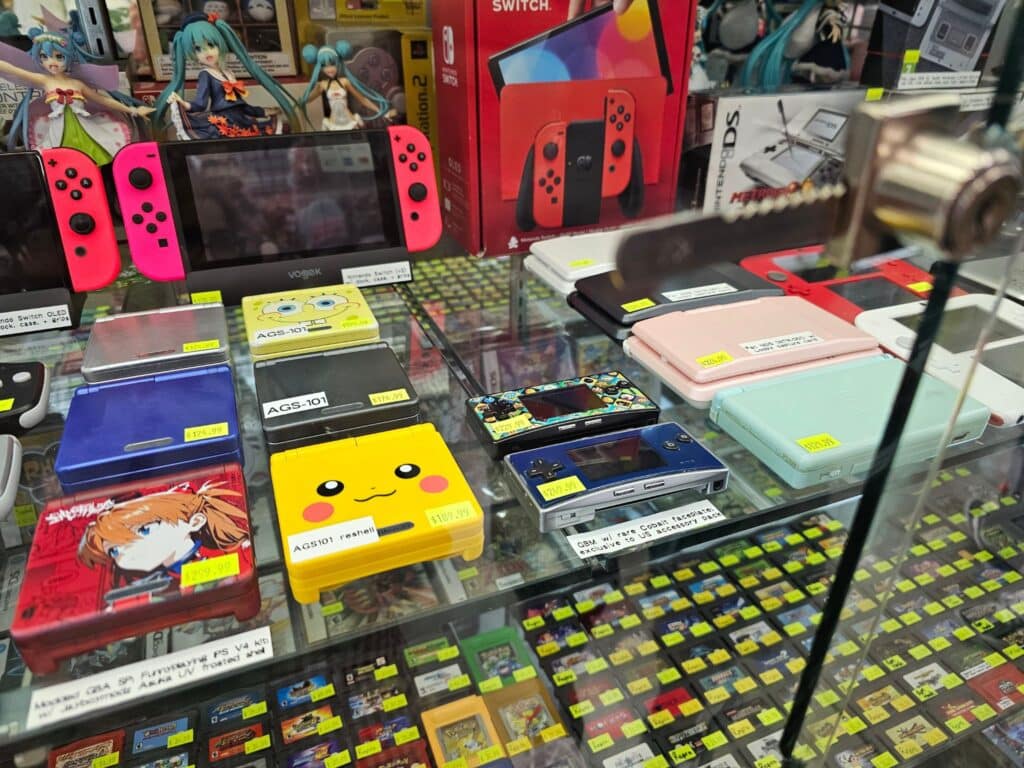
As far back as the Wii, Nintendo knew it could not win a tech race against giants like Microsoft and Sony. The 2017 launch of the Nintendo Switch represented the culmination of everything Nintendo learned from its successes and failures over two decades. Nintendo correctly surmised that its primary consumer base had aged up. The company reached this conclusion by observing changing habits in its homeland of Japan. Once-loyal customers were abandoning home consoles in favor of mobile gaming, which suited a train-commute-dependent population.
That pattern repeated worldwide. Adults struggled to find time for consoles attached to TVs, and they found their gaming time split between streaming services and short-form content like TikTok. Despite analysts predicting that smartphones had made dedicated portable devices irrelevant, Nintendo knew its audience wanted deeper experiences. The Nintendo Switch launched into this environment and became one of the best-selling pieces of hardware ever made.
Are Sony and Nintendo Competitors?
Not really—at least not right now. Sony remains firmly in control of AAA gaming and third-party titles, though that space is shrinking quickly. Despite slowing sales, the PlayStation is still the go-to place for best-selling titles like Call of Duty and FIFA (or EA Sports FC… that is still so weird to type). It remains the primary media center for many living rooms thanks to its fast, reliable access to streaming services.
Meanwhile, Nintendo exists in its own world. Third-party titles still struggle to sell on Nintendo’s hardware, but Nintendo’s first-party titles remain beloved and exclusive. Crucially, both systems occupy different spaces in a consumer’s life. Traditional gamers may use the Switch as a secondary console while playing primarily on a PS5 or PC. They take the Switch out for Nintendo exclusives or travel. It is also important to note that handheld PCs like the Steam Deck have made almost zero impact on the broader gaming market, though that could change as Valve enters the console space.
The True Competition
Microsoft understood the real competition best, even if it failed to execute the vision. Gamers are increasingly time-strapped. Millennials contribute the most gaming revenue to the industry, yet they face constant distractions from Netflix, Disney+, and YouTube. They also travel more than any other demographic in history. Simply put, they spend their limited home time on other media; when they do have downtime, they are often away from home. Furthermore, as they become parents, they find it harder to dive into a 100-hour Assassin’s Creed game.
Besides Nintendo, three other companies realized this trend and built strategies around it. Amazon and Google attempted to enter the space with cloud gaming services like Stadia and Luna. Inexperienced with the high costs of game development, both initiatives failed quickly. This left Microsoft’s cloud strategy as the only viable competitor in the space. All three companies incorrectly believed that Switch lovers would embrace cloud gaming on mobile devices. However, this tech still relies on fast, stable internet, and consumers generally feel the technology is not ready for primetime. Additionally, cloud gaming requires a controller or a shell attachment, lacking the “pick up and go” usability of the Switch’s instant sleep mode. While cloud gaming will inevitably become a major part of the ecosystem, we are not there yet.
E3 2013: The Day the War Was Won
In 2013, following the tremendous performance of the Xbox 360, Microsoft revealed its vision for the future: the Xbox One. The reveal did not go as Phil Spencer and the team expected. Instead of speaking to the core gamers who wanted news on the next big titles, Microsoft stumbled with a confusing message. Microsoft correctly anticipated that consoles would become the centerpiece of the living room, but they positioned the Xbox as an “all-in-one” entertainment device. It hosted streaming services, connected to live TV, and offered recording features—all controlled via voice or hand motions through the mandatory Kinect camera.
Unfortunately, Microsoft misinterpreted its audience. They were speaking to a room of gaming press and influencers who wanted to see Halo, not the next 49ers game. Furthermore, Microsoft adopted confusing digital library policies that seemed forward-thinking but felt draconian and anti-consumer at the time.
The Microsoft of fifteen years ago had learned from the launch of Xbox Live for Windows. They saw how difficult it was to lure PC gamers away from Steam. They believed Steam users stayed on that platform because of their massive digital libraries. Microsoft knew that if they recreated that “digital lock-in” on consoles, they could win the entire war. To accomplish this, they pushed a digital-first strategy that downplayed physical discs. To enable digital sharing and rentals, Microsoft courted publishers like EA and Activision. Those publishers agreed, but only on the condition that Microsoft remove the ability to play used games. This digital-first strategy also required the Xbox to stay constantly connected to the internet.
All eyes turned to E3 2013 as Microsoft tried to alleviate “anti-consumer” concerns. While they held a decent press conference, they incorrectly assumed Sony had made similar restrictive agreements with publishers. Instead, Sony revealed the PlayStation 4 by taking direct shots at its competitor.
Grinning from ear to ear, Sony Entertainment CEO Jack Tretton announced that the PS4 would allow used games with no restrictions. He then announced the console would not require online authentication. Finally, despite having more powerful hardware on paper, the PS4 launched at $100 cheaper than the Xbox One. The announcement led to the longest sustained applause in E3 history. In retrospect, experts consider this the moment the Xbox brand died and Sony officially won the war.
This is (Not) an Xbox
During GDC 2026, new head of gaming Asha Sharma laid out plans for the future of Xbox. These plans include a PC-centered ecosystem that brings the flexibility of PC gaming into the living room. This new console will run not only Xbox games but also titles from storefronts like Steam and the Epic Games Store. Simultaneously, Microsoft quietly removed its confusing “This is an Xbox” ad campaign. This shift says more about Microsoft’s current direction than any other announcement. Now armed with massive IP from Bethesda and Activision, Microsoft has a real opportunity to regain ground.
Seemingly in response to this new battle for the living room, Sony also announced it would end its strategy of porting exclusives to PC. This is likely a reaction to the fear that Sony’s expensive AAA catalog could eventually be playable on a future Xbox/PC hybrid device.
So What’s Next?
Industry insiders have begun leaking that both Sony and Microsoft plan to release new hardware in 2027. Many believe this is a bad idea. High RAM costs, a lack of meaningful hardware gains over the last seven years, and pandemic-related development delays mean many gamers feel they haven’t even exhausted the current generation yet.
However, the consumer perspective is only half the story. Despite PlayStation’s dominance, Nintendo is now operating in open waters, seemingly able to do anything while customers eat it up. Furthermore, Valve’s entry into the space means gamers with massive Steam catalogs might choose a “Steam Machine” or a Steam Deck over a traditional console. Both Sony and Microsoft are also rumored to be developing portable devices to challenge the Switch.
Everyone agrees that the future involves playing your library anywhere, anytime. Yet, all three companies—and now Valve—have diverging plans to achieve this. Just as one console war ends, another begins.
And war… war never changes
