
No—of course not. But there is some truth to the rumor.
Today marks the release of Dragon Quest VII Reimagined, a full glow up of one of the series’ most quirky titles. Dragon Quest games have gained some popularity in the West in recent years following the success of Dragon Quest XI way back in 2018.
Prior to that, the series saw limited interest in the states. Only two games saw some commercial success: the Playstation 2’s Dragon Quest VIII and the criminally underrated Dragon Quest IX on Nintendo DS. But following strong sales of Dragon Quest XI, Square Enix began looking to its catalog for more games while we await the long-in-development-hell Dragon Quest XII.
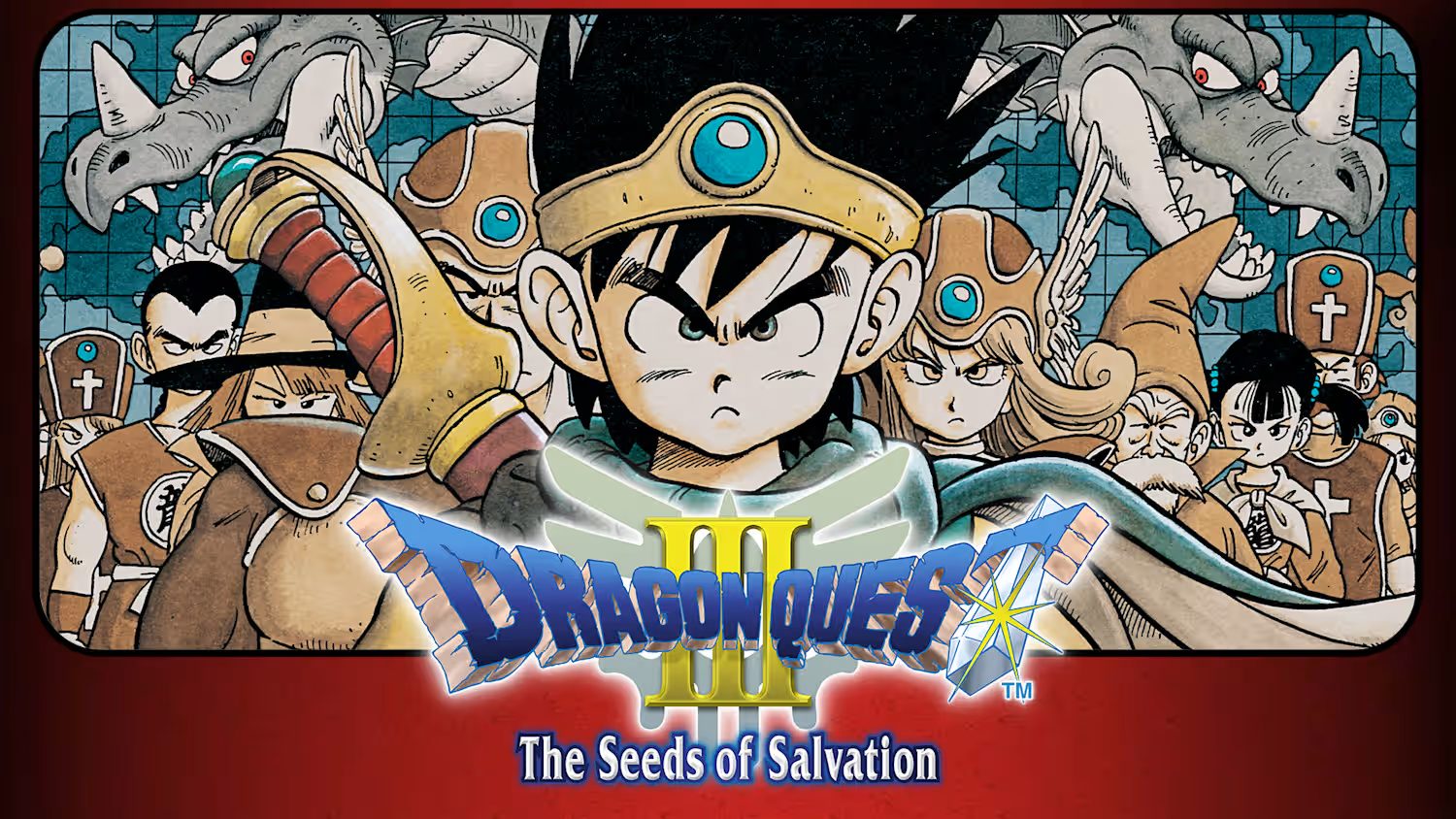
The result was a pair of excellent remakes. Dragon Quest III HD-Remake and Dragon Quest I+II HD-Remake released nearly back-to-back, utilizing the “2D-HD” art style that games like Octopath Traveler and Star Ocean Second Story popularized.
The new art style, alongside several quality of life improvements, updated translations and voice acting, and various other new features really breathed life into these classics. Fundamentally these were NES games, early RPGs that really embrace the core loop of the genre. You grind, you level up, all within the storybook of an ultra simplistic narrative. They were simpler games from simpler times, and therein ultimately lay the appeal of Dragon Quest. It will always be what it is.
Square Enix Origin Story: How Final Fantasy’s Risks Led to a Mega-Merger
Final Fantasy also saw limited success in the West for most of its run. Three entries in the venerable RPG franchise didn’t even make their way stateside until after the success of its first PS1 entry. While Final Fantasy games never carried forward stories, characters, or even combat systems between installments, Dragon Quest instead embraced tradition. The Dragon Quest series became the ultimate expression of the fundamentals of JRPG game design. It iterated and perfected a formula that still resembles the very first Dragon Quest game released way back in 1987.
While Dragon Quest publisher Enix remained firmly in the camp of iteration, Square set off to create what is now known as the first modern AAA title with 1997’s Final Fantasy VII. This one game single handedly popularized RPGs in Western markets. But Square flew too close to the sun. While Enix churned out a regular cadence of Dragon Quest games that sold well in their native Japan, Square took on riskier and riskier projects with budgets unheard of in the gaming world. All that bluster during the PS1-era placed Square in financial trouble, and the studio began seeking a merger with the safer, more predictable Enix in the early 2000s.

Enix executives were shocked at Square’s spending, namely on the complete flop that was the film Final Fantasy: The Spirits Within. They would only agree to a merger if Square could stabilize. To do so, Square found itself selling partial ownership to Sony and forming a creative partnership with Disney Interactive to work on a new initiative, what would become Kingdom Hearts.
With stable ground under their feet, they approved the merger. The entity now known as SquareEnix formed in 2003. Square would continue doing what they do best: growing the JRPG audience with large, big budget games that appealed worldwide. Meanwhile, Enix would embrace their role as the dependable bread winner, providing consistent and predictable performance with their Dragon Quest titles. This strategy relied on one important factor: Japan will always buy Dragon Quest games.
Why is Dragon Quest So Popular in Japan?

In the 2020 release Yakuza: Like a Dragon, a reboot of the Yakuza series that switches from action combat to turn-based combat, main character Ichiban Kasuga grew up as a major fan of the Dragon Quest games. This personality quirk is responsible for the switch to a turn-based combat system, as Ichiban fantasizes that his adventures are like a game of Dragon Quest. He also derives his philosophy in life from the game. “Sometimes you have to grind a little until you’re strong enough” becomes a coda for the game’s narrative.
Many in Japan can relate to Kasuga. Dragon Quest has been deeply ingrained in the country’s minds since its first release. In fact, surveys have shown that Dragon Quest is second only to Pokemon as the most popular video game series in Japan. It’s a genuine cultural phenomenon over there. But why did this game hit so hard with this particular audience?
The Wizardry Connection: Dragon Quest’s Western Roots

We can perhaps trace the popularity of Dragon Quest back to another series that only seems popular in Japan: Wizardry. Wizardry was actually a Western developed RPG, a dungeon crawler that SirTech created and released in 1980. It was available on PC platforms like the Commodore 64 and Apple II. Wizardry was one of the earlier attempts to translate Dungeons and Dragons to a video game medium. While the narrative portions of classic D&D were difficult to capture, the simpler turn based combat and experience point based leveling were much easier to translate to a simple computer game.
The problem was that personal computers were not very popular in 1980s Japan. Despite its perception as a technology forward country, Japanese business culture is slow to embrace new technology, and computers are no different. They remained a hobbyist venture for many years, but one system did manage to gain momentum: the MSX. Comparable to the US’s Commodore 64, the MSX was many Japanese enthusiasts’ very first home computer, including Dragon Quest creator Yuji Horii. His love of the MSX port of Wizardry inspired his next video game. He would take the slower paced, tactical battles of Wizardry and translate them to a much more popular game console: the Nintendo Entertainment System.
How Dragon Quest Captured Japanese Culture
The Dragon Quest core gameplay loop was very appealing to the structured, hardworking Japanese student and salary man. The slow grind, where the challenge was in optimizing productivity so you could acquire experience and gold most efficiently until you become powerful enough to overcome a major challenge, spoke deeply to the cultural side of Japan’s working class. Importantly, it wasn’t a game where physical dexterity or reaction times were important.
Dragon Quest rewarded critical thinking, planning, and hard work. All tenets that are ingrained in Japanese education and in the workplace. To be good at Dragon Quest you didn’t need to go to the arcade and play against others. Dragon Quest was something you did at home, exploring and growing your knowledge of the game world and its secrets, all at your own pace.
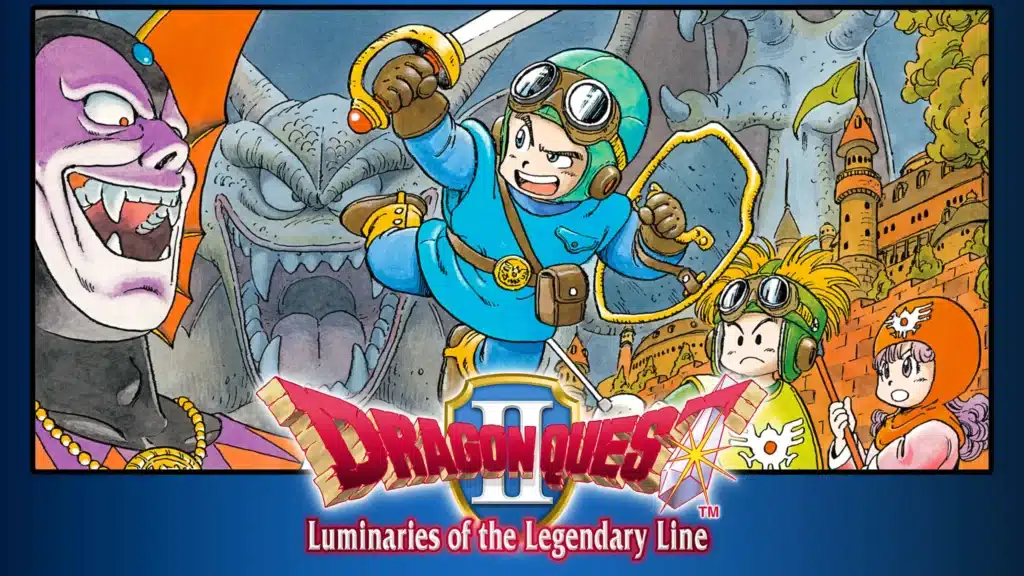
The game was an immediate hit in its home country. It quickly outsold all games of the year. At least in Japan, the 1987 release of Dragon Quest II was the first time queues formed outside of retailers to buy a video game. This shocked Japanese publishers, who at the time really didn’t monitor street dates and accepted that retailers would just throw the game on the shelf the minute they received it. In many ways, Dragon Quest also started the concept of marketing in games. Enix now had to be very explicit with when the game would release and build a marketing campaign around that release date. Plus they would need to ensure they had enough physical copies to meet demand.
That last part is where we bring our story together and finally ask the question: did the Japanese government actually ban Dragon Quest releases on weekdays?
Dragon Quest III: The Release That Started the Myth
The 1988 release of Dragon Quest III was seen as the biggest entertainment launch in the country’s history. While Dragon Quest I and II had been released just 8 months apart, Dragon Quest III needed an entire year of development, unheard of at the time. Dragon Quest III would be the largest video game ever created.
Anticipation of the new game was ridiculous. The evening news even offered reports on development updates from the studio.
The 1988 Semiconductor Shortage Crisis
Real life events have a funny way of interrupting our gaming, don’t they? In 1987, US based semiconductor manufacturers were struggling against their Japanese counterparts, who often sold superior components below market cost. The Regan administration reached an agreement with the Japanese government to limit inventory of semiconductors coming out of Japan, in exchange for favorable conditions in other markets, such as vehicles.
This gave US manufacturers a chance to catch up. This would see a crisis as Japanese manufacturing pivoted away from semiconductors and into other components, well before other countries could pivot to manufacturing components. The chip shortage was so severe that Nintendo themselves pivoted away from game carts and to much more readily available floppy disks. They released the Famicom Disk System in an effort to keep video game costs down.
However, Dragon Quest III was too far in development to pivot to a new medium. They would release the game on a traditional NES game cart, despite the chip shortage. This meant there were not nearly enough game carts to satisfy demand. Enix pre-emptively communicated this to Japanese customers weeks in advance of the release date in an effort to curb expectations of getting the game on launch day.
The over communication had a backwards effect. Instead of accepting that they might not score the coveted game on release day, Japanese fans instead lined up in droves outside stores hours ahead of opening. They hoped to score one of the limited copies of the game each store would receive.
Chaos at Japanese Game Stores
Dragon Quest III launched on February 10, 1988, a Wednesday. Stores that stocked the game, sometimes with as few as three copies, saw a line begin forming after work hours on the evening of the 9th. While the games publisher anticipated the excitement, retailers were caught off guard and struggled to provide adequate staffing for line management.
Arguments and even violence broke out. Local police were dispatched to provide assistance with lines. Police arrested over 200 students for breaking curfew, while they arrested an additional 300 the following day for truancy. Japanese companies saw a 13% increase of employees calling in sick for the Wednesday release.
The response to the lines spread Japan’s local police forces very thinly. Police precincts began calling on Enix for accountability. They argued the publisher did little to discourage the negative behavior of its customers. They also publicly shamed retailers that broke street date, which further exacerbated the challenges of the evening as crowds rushed doors to secure their copy of the game.
The message from the police was clear. Enix needed to coordinate large events like this with local law enforcement to ensure adequate coverage. However, Enix saw this as a marketing opportunity. Their game was such a hit that people were literally breaking the law to get their copy.
With images of that chaotic night circulating on local news, Enix seized the moment to capitalize on the success. The publisher released a statement that due to the overwhelming popularity of the game, future releases in the Dragon Quest series would be released on Saturdays. This would give fans the full opportunity to wait in line for the game without consequence. They also released ads discouraging youth under 18 from lining up for the game and instead encouraging them to ask an adult to do so in their stead.
The Truth: No Dragon Quest Law Ever Existed
Despite all this, the Japanese government never actually acknowledged the events and made no such effort to forbid Enix from releasing games on weekdays. Nor would they legally be allowed to establish such a mandate. Local police precincts also made no effort to formally petition Enix to only release on weekdays. The entire idea of only releasing on weekends was simply a marketing stunt where Enix capitalized on one night of chaos.
For their part, Enix did commit to releasing the next game in the series, Dragon Quest IV, on a Saturday. By then chip shortages were a thing of the past and plenty of copies of the game were available to anyone who wanted one.
After that, Dragon Quest releases tend to follow the preferred release date of whatever platform they’re first releasing on, oftentimes a Tuesday or a Thursday during the week. The entire event would foreshadow a similar event that was about to hit the US: the release of the Nintendo 64 during the holiday season of 1996, the first time a video game release caused lines to form outside of a retailer.
