
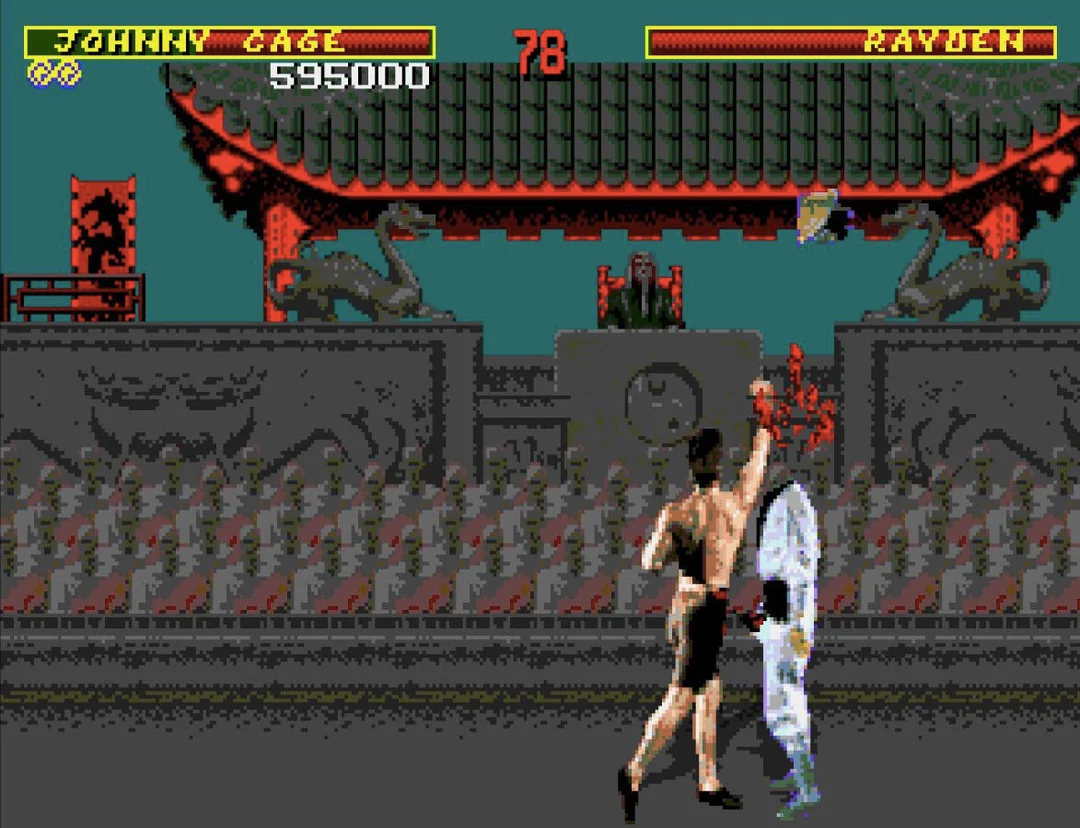
Mortal Kombat quickly became the talk of the gaming industry when it arrived in arcades in 1992. The ultra-violent arcade fighter was a smash hit. It cemented fighting games as the new genre leader in arcades across America.
Thanks to games like Mortal Kombat and Street Fighter, arcades remained a viable avenue for commercial success. At the time, consoles were forcing the market to shift away from arcades and into the living room; Nintendo’s Super NES and the Sega Genesis. Both companies locked into a marketing war as they aggressively courted North American gamers.
Nintendo clearly led in console market share when the time came to port Mortal Kombat to consoles. Nintendo had positioned itself as “the Disney” of the video game world. It was a platform where parents felt assured their children played in a safe environment. To counter this, Sega positioned itself as the console for older, more mature gamers who wanted “more sophisticated” experiences.
Mortal Kombat Gets All the Wrong Attention
Mortal Kombat with its excessive gore and violence, was a success. Other developers quickly followed suit, releasing increasingly violent games to capitalize on the title’s popularity. The game’s popularity and the astronomical rise of the video game industry caught the attention of US lawmakers Herb Kohl and Joe Lieberman.
The ESRB did not yet exist. Instead, game developers followed platform holders’ standards and practices. Nintendo always wanted to avoid controversy and maintained fairly strict requirements for its platform. After reviewing the SNES port of Mortal Kombat, Nintendo declined to release it unless Midway removed all fatalities and replaced the red blood with white “sweat.” Midway strongly opposed these changes. They felt the blood and violence distinguished Mortal Kombat from Street Fighter and believed their audience would hate a toned-down version.
Meanwhile, Sega took a much more relaxed approach. They allowed the game to remain fully uncensored, provided players could turn off the gore for a more sanitized experience.
Sega’s approach attracted Midway, but the SNES led in market share. Making the game a Genesis exclusive was not commercially feasible. Despite the developers’ frustrations with Nintendo, the game had to launch on both consoles.
ABACABB – The Mortal Kombat Blood Code
Midway’s marketing teams saw an opportunity. Instead of making the Genesis version default to “blood on,” they defaulted it to “off.” Players would have to activate the blood with a “secret code.” Marketing would hold on to the code until the holiday season. Then air global TV commercials revealing the code to players, boosting sales and gave the game a second marketing beat after its release.
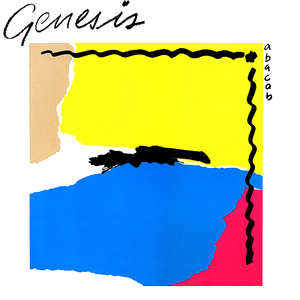
The code itself needed to be easy to remember and simple to input on the Genesis three-button controller. The team landed on ABACABB, a nod to the album Abacab by the band Genesis.
Players did not discover the code itself immediately after release. Like many games of the time, a secret developer menu was created that assisted in QA testing. Amateur hackers quickly discovered the developer menu and shared their findings via Usenet, an early online message board. The code was “DULLARD” (Down, Up, Left, Left, A, Right, Down).
Fan and Usenet user Dan Amrich began breaking down the “flags” in the game’s code that switched on when a player activated developer cheats. He noticed flags that rendered the original arcade blood and fatalities. This small group of enthusiasts had unintentionally stumbled upon what would become the most successful marketing campaign for a video game at that time.
Nintendo learns a hard-hitting lesson
The September 1993 release of Mortal Kombat was the biggest video game launch ever. Accompanied by a massive marketing campaign, it easily became the best-selling title of the year. As the December holiday season approached, the marketing campaign revealed the blood code to players for the first time.
The result was grim for Nintendo. The best-selling game of the year sold 4-to-1 on Genesis compared to the Super Nintendo. Critics preferred the SNES version for its stable framerate and arcade-perfect gameplay, but players did not want a sanitized experience. Genesis sales eclipsed SNES sales for the first time that holiday season.
Nintendo panicked. The Genesis now threatened to dethrone their market dominance. Nintendo immediately ordered a review and granted exemptions so that Mortal Kombat 2 would arrive on the SNES with full gore the following year. But the damage was done. Many view the launch of Mortal Kombat as the true start of the most famous console war of all time.
Congressional Hearings and the Founding of the ESRB
Senator Joe Lieberman used the game’s success to springboard his campaign for tighter government control over video game content. A moral panic in the 1980s had already led to government agencies rating other media. Lieberman contested that video games warranted an equal governing body.
The gaming industry did not necessarily oppose the idea, but they pointed to cases where government agencies failed to maintain equal standards. In some cases, agents even accepted bribes. Furthermore, the rapid pace of game development clashed with the long lead times the government needed to evaluate games. The industry argued this would create logistical nightmares for a growing market.
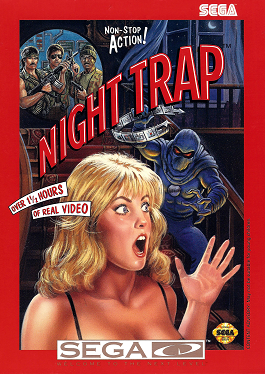
As the debate intensified—exacerbated by the FMV game Night Trap on the Sega CD—retailers caved to public outcry. Major distributors like Toys “R” Us refused to stock violent games. Under this existential threat, publishers and manufacturers met to discuss a path forward. Representatives from Sega, Nintendo, CD-i, Acclaim, Electronic Arts, and others set aside their differences.
This group, known as the IDSA (Interactive Digital Software Association), developed a program with consistent standards. This program would independently review games and assign ratings. It also worked directly with developers to settle disputes.
Sega initially proposed elevating their own internal standards, known as the VRC (Videogame Rating Council). Nintendo strongly opposed this because it would make Sega the hero to US lawmakers. Instead, Nintendo insisted on a new agency independent of all console players and publishers.
This agency became the ESRB (Entertainment Software Rating Board). It did not report to manufacturers and was forbidden from entering commercial game development in any manner. Instead, government funding and support from the industry sustained it. The industry officially revealed the ESRB to Congress in July 1994, and it began operations that September. The first rated games included DOOM for 32X (Mature), Pitfall: The Mayan Adventure (Teen), Super Punch-Out!! (K-A), Sonic Triple Trouble (K-A), and Donkey Kong Country (K-A).
The IDSA dissolved shortly after the ESRB’s formation. Today, the ESRB remains the leading authority on game content ratings and industry advocacy in the US. Other countries adopted this model for their own regulatory bodies, including PEGI in Europe and CERO in Japan.
