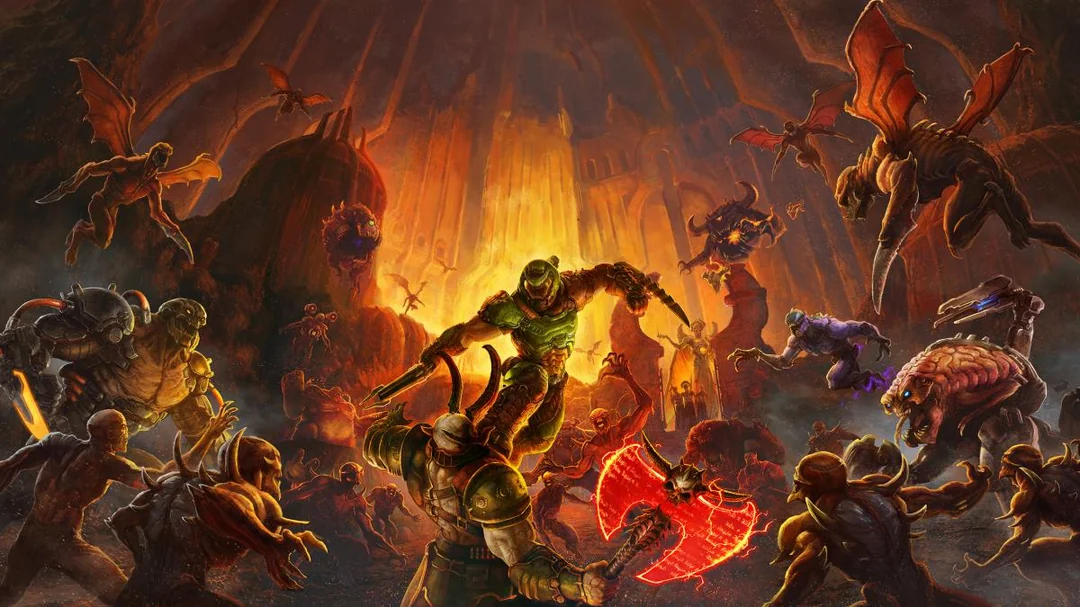
For all intents and purposes, id Software intentionally left Doomguy (aka the Marine or the Slayer) void of characterization. Often, his sole motivation and purpose for existence is to kill demons. This single-minded mission frequently creates a comic effect. For example, in 2016’s DOOM, an uninterested Doomguy often ignores exposition-heavy dialogue to continue his murder spree. In many ways, Doomguy is the quintessential video game character. He is a symbol of pure gameplay, an extension of the player’s will, and a flagship icon for the first-person shooter genre he defined.
Early id Software Looks to Nintendo
Developer id Software’s previous games were light on narrative. Commander Keen told a simple tale of a child genius building a spaceship to stop an alien race on Mars. This was about as detailed as the developer got. They conveyed this story via still-image cutscenes and a short paragraph in the instruction manual. Keen set the precedent: narrative in id’s games served only to prepare the player for great gameplay.
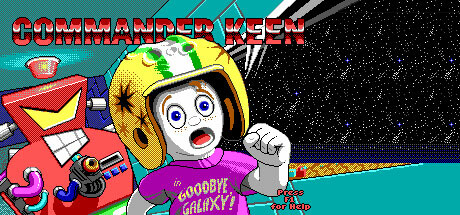
Commander Keen’s origins inspired this simple narrative support. The studio’s developers had originally built a game engine featuring smooth side-scrolling. To demonstrate this technology, the team pitched a port of Nintendo’s Super Mario Bros. 3 for DOS. When Nintendo passed on the project, the studio sought to build the PC’s version of Super Mario.
The studio’s first major breakout was 1992’s Wolfenstein 3D. Again, the story was simple. Players take on the role of Polish-American soldier B.J. Blazkowicz. Nazi soldiers captured him during an undercover mission to stop Hitler. B.J. simply means to escape from “Castle Wolfenstein.” If he has to kill a double-minigun-wielding Hitler to do so, then so be it.
Both Keen and Wolfenstein displayed id’s belief in gameplay over narrative. Many point out that storytelling was more limited then, but other studios were crafting bigger stories. Franchises like Wing Commander and Command & Conquer included Hollywood-quality FMV scenes. Indeed, the point-and-click adventure game—the dominant PC genre at the time—was steeped in lore. Id’s approach was an aesthetic choice. The development team greatly admired how Nintendo built franchises with thin narrative frames that only supported what was needed for gameplay.
Doom Becomes the Magnum Opus of “Who Gives a Shit” Storytelling
1993’s Doom is now one of the most important games ever released. It popularized the FPS genre, network deathmatch, and 3D gaming. Remarkably, the package ran on even the most mid-range PCs of the time. Doom also marked the start of the developers’ tacit acknowledgment of their ridiculous storytelling.
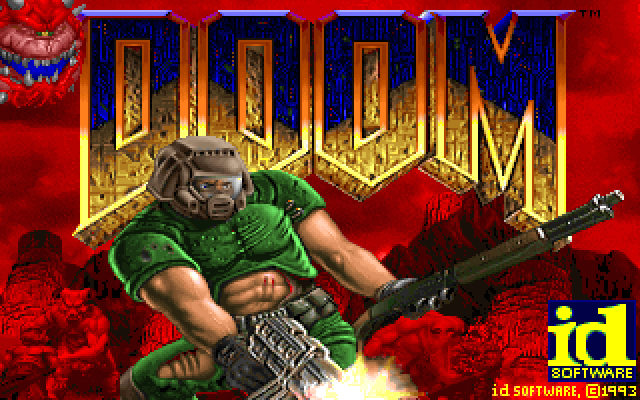
Known as “The Marine,” the character’s story relied on simple cutscenes with one or two sentences to imply progression. The manual told players all they needed to know: they are a space marine on Mars, and demons from Hell have taken over. Get killing.
Many gamers may be surprised to find out there was even a story. This is due to the “shareware” business model popular in PC gaming at the time. To reduce file size, the shareware version of Doom—which contains the first nine levels—removed the narrative cutscenes. The full version reveals Doomguy’s dark motivation for his killing spree.
Daisy: Doomguy’s Pet Rabbit
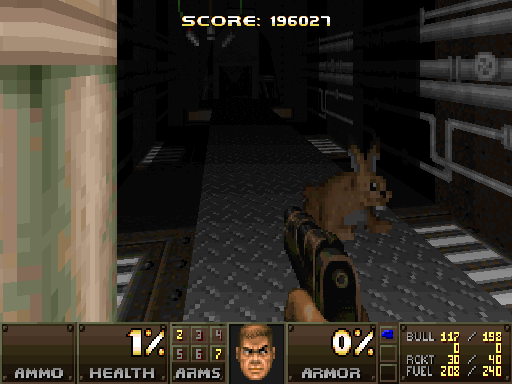
The end cutscene for Episode 3: Inferno hints at Doomguy’s motivation. It depicts a rabbit resting in a field of flowers. As the camera pans, the scene becomes filled with fire and brimstone. It then reveals the rabbit’s head impaled upon a spike. While gruesome, the game doesn’t immediately tell the player why this rabbit matters.
The end of Episode 4: Thy Flesh Consumed finally reveals that the rabbit belongs to Doomguy. Holding the rabbit’s severed head in his hands, the text explains simply that “someone was gonna pay for what happened to Daisy, your pet rabbit.”
This bizarre motivation for Doomguy’s mindless bloodlust was the culmination of id’s storytelling. It was a throwaway plot point purposeful in its purposelessness. Ultimately, the developer was saying to the player, “Who cares? It’s a joke—just keep playing.”
Fan Theories Erupt Over Daisy
Daisy frequently appears in various Doom games and media, often perplexing gamers who are not familiar with the bizarre backstory of Doomguy.
Daisy can be found somewhere in every level of Doom Eternal, subtly hinting that Doomguy is hallucinating, unable to cope with the loss of his rabbit. In the 2019 film Doom: Annihilation, Daisy the rabbit appears as a sentient AI, revealed to be the antagonist of the film. The mobile game Might Doom features Daisy on the shoulders of Doomguy during a particular load screen.
In the years since Doom released, loyal fans began to make connections between id’s titles. One theory suggests Commander Keen is the son of B.J., and Doomguy is the son of Commander Keen. The developers simply laugh off the connection, letting players run wild with theories.
Regarding Daisy, the most common theory is that she represents Doomguy’s wife and child, who died during the first game. An interview with creative director Hugo Martin supports this. He confirms that Doomguy once had a wife and child who are no longer around. This lends credence to the idea that Daisy is a symbol of Doomguy’s desire for revenge and his descent into violent insanity.
Or is it? Quake Champions explicitly states that Doomguy always carries a rabbit’s foot keychain to remind him of what he has lost.