
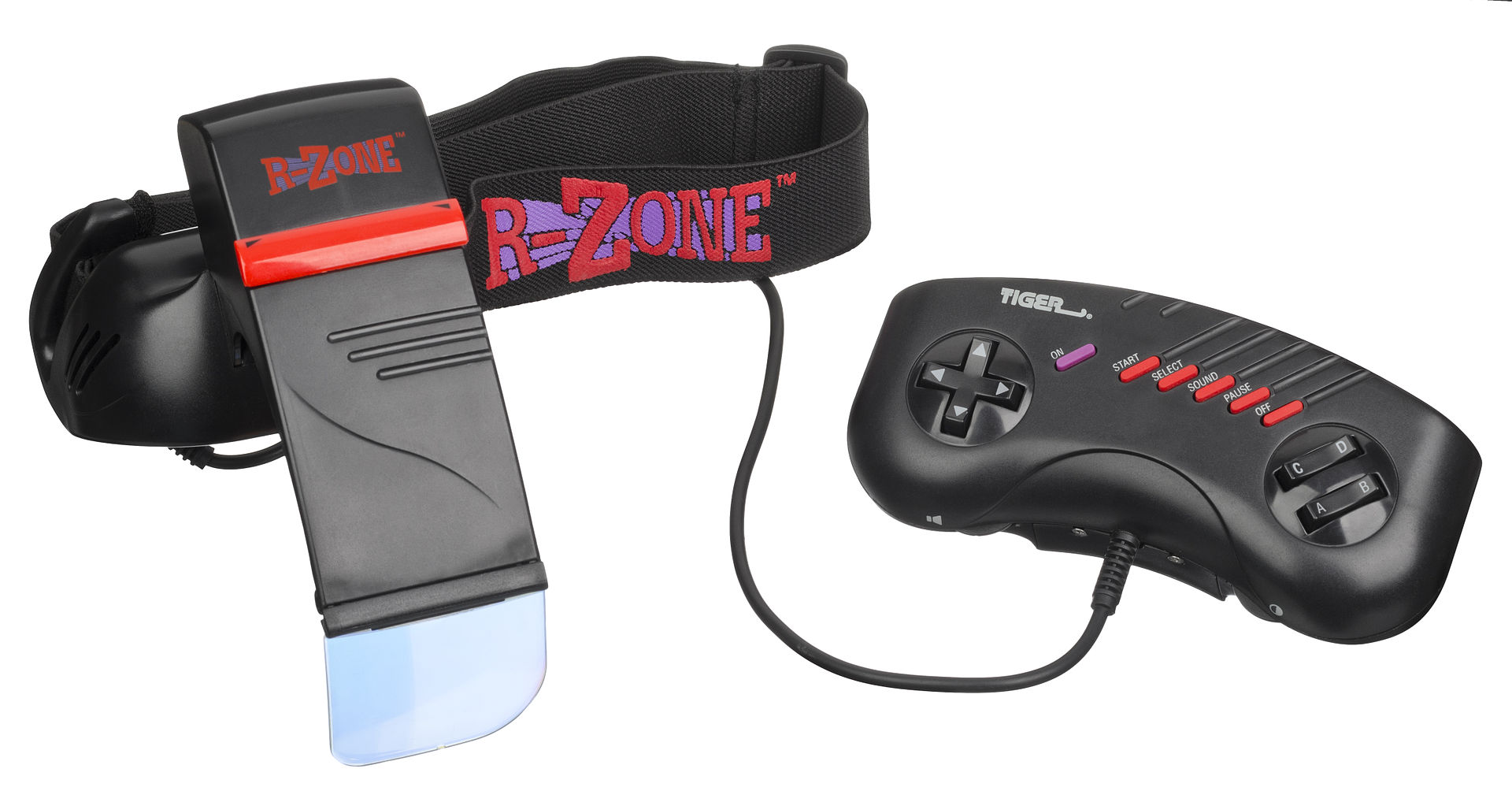
Nintendo is set to launch Virtual Boy for Nintendo Switch this month. This marks one of the few times the monumentally successful company has acknowledged its biggest failure. Released in 1995, the Virtual Boy was the brainchild of Game Boy creator Gunpei Yokoi. The device was such an abysmal disaster that Nintendo sidelined Yokoi from all future business decisions. He ultimately left the company the following year.
Before its release, some companies actually saw the Virtual Boy as a potential competitor. Others felt so sure of Nintendo’s business practices that they believed the company could only release winning ideas. One of those was US-based Tiger Electronics. They distributed the classic LCD-based handheld games that had gained a reputation as “the poor-man’s Game Boy.”
The R-Zone – Embarrassment you can wear
Enter the R-Zone. If historians had to place this piece of hardware on a timeline, it would obviously sit in the 90s alongside JNCO jeans and the Tamagotchi.
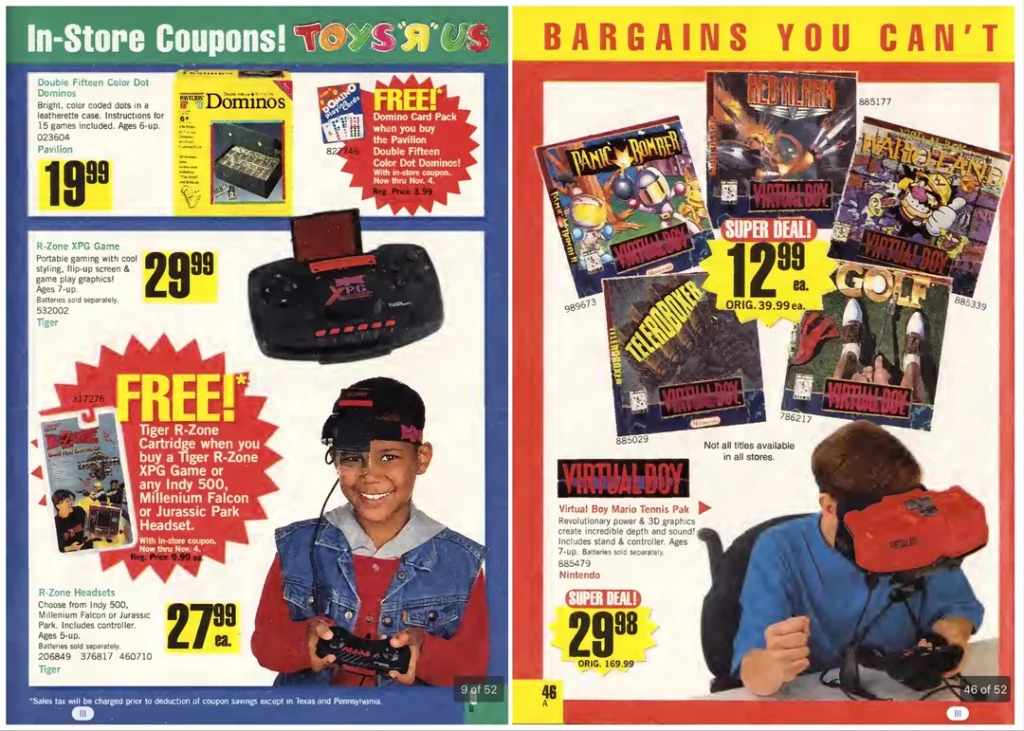
Tiger Electronics released the R-Zone portable game console in 1995. It mounted onto the player’s head using an elastic strap. Gameplay projected onto a clear glass display that sat a few inches away from the player’s right eye. The device itself functioned simply as a projector. The game cartridge contained the game screen, which was a clear plastic LCD panel that allowed light to pass through it.
The R-Zone projected the image from the cartridge onto the screen in front of the player’s eye. Inexplicably from a design perspective, this setup worked best if you closed your left eye and focused only on the screen in front of your right eye.
R-Zone games were similar to Tiger Electronics LCD screen games. Those games functioned like calculators because all images were pre-drawn onto the screen. The hardware illuminated them individually to give the perception of movement and animation. While they seem pretty terrible in retrospect, most gamers born in the 80s or 90s likely encountered one of these types of games. They understood just how limited gameplay could be with such restricted animation. Unique to the R-Zone, however, was the red projection light. Tiger chose this in an effort to mimic Nintendo’s upcoming Virtual Boy. This headache-inducing decision rendered all games a single color.
Tiger Electronics knows it sucks but assumes you still will buy Batman
Despite both the Game Boy and Game Gear holding the majority of market share in the portable game market, Tiger Electronics’ line of LCD games still held enormous popularity and sales. Two factors caused this. First, the games themselves were fairly cheap both to produce and for consumers. They typically landed between $9.99 to $19.99, while Game Boy games could run as high as $39.99. The second factor was Tiger Electronics’ seemingly endless licensed IP. They offered extremely popular brands such as Jurassic Park and Batman on their line of LCD games.
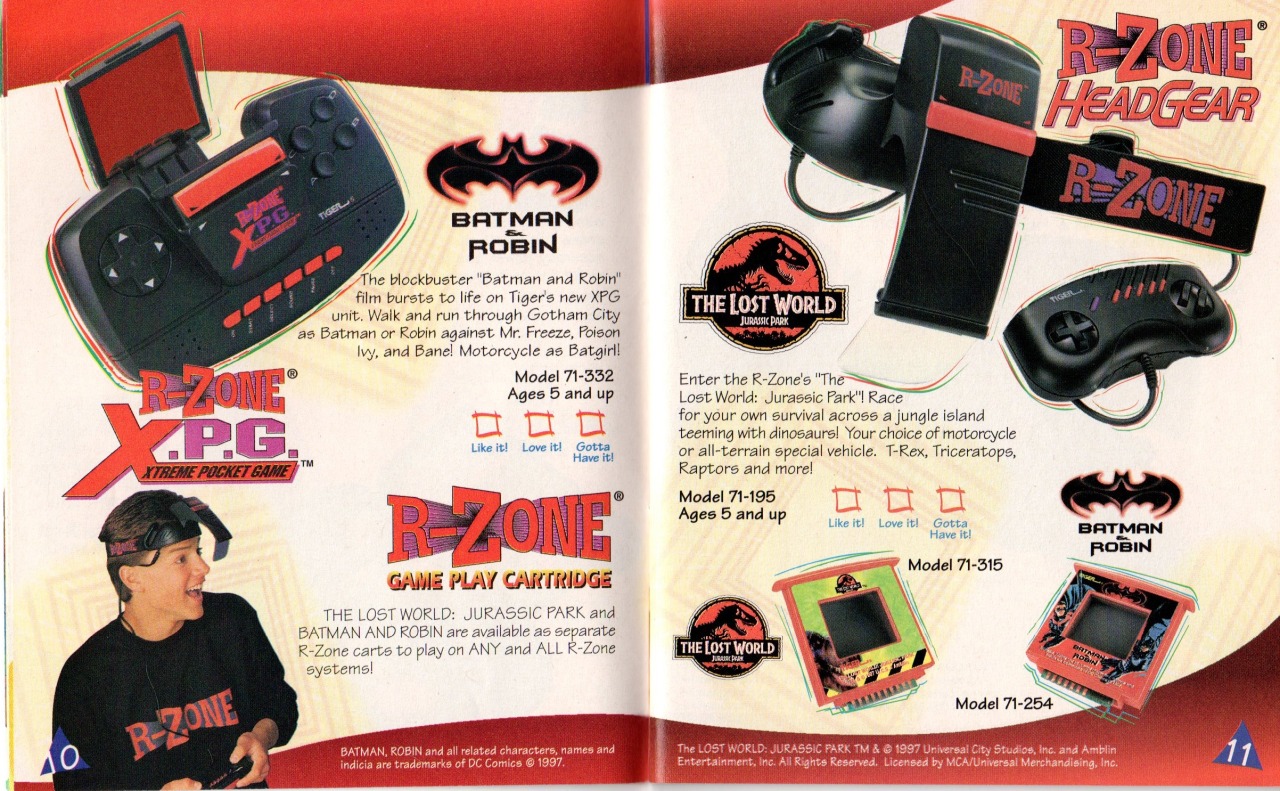
The R-Zone came out of the gate swinging in this regard. A new Batman game, based on the upcoming release of Batman Forever, was available on day one of launch. The marketing machine behind Batman had guaranteed that anything Bat-related would be a surefire hot item that summer. It also helped that of all the games on the system, Batman Forever was actually a fairly well-done title. It offered both platforming and driving segments despite the technical limitations of the device.
But still nobody wanted it
Reviews were not kind. Critics complained the device was uncomfortable and that the games were insultingly simple. They also noted that players looked absolutely ridiculous wearing the headgear.
Tiger Electronics also lost two of its advantages in creating the device. The game carts themselves needed to house the LCD screen, which drastically increased costs. Additionally, consumers could no longer buy a game as an all-in-one experience. R-Zone games were similar to other consoles because you had to buy both the game and the hardware for it. This put the R-Zone in the same price range as the Game Boy and Game Gear. This shift removed one of the company’s biggest strengths in the market.
Tiger Electronics quickly realized they had a flop on their hands. They pivoted to new hardware that could play R-Zone games on a traditional Game Boy-style device. This version removed the red backlight and the head strap. The re-released R-Zone XPG (Extreme Pocket Game) performed even worse than the original hardware. Tiger Electronics was forced to halt all development on R-Zone initiatives in just under a year.
Is it the worst console ever released?
In a 2008 article rating game hardware, GamesRadar+ rated the R-Zone dead last. They called it the single worst gaming hardware ever released. The limited sales of the console have made it a bit of a unique item for collectors, especially the XPG model. But GamesRadar+ closed their brief write-up of the forgotten console with possibly the best description of the hardware:
“They basically made a Virtual Boy but somehow worse in every conceivable way.”
