
When Sony launched the PSP in 2004, they didn’t simply market it as a video game device competing with the Nintendo DS. Sony envisioned the system as the next iteration of their famous Walkman, a device that had a profound impact on consumer media consumption, becoming an icon of the 1980s in the process. The PSP wasn’t just a gaming device. It held your digital music and movies, digital photos, featured a web browser, and even let you download classic PS1 titles. It was the ultimate device for PlayStation fans.
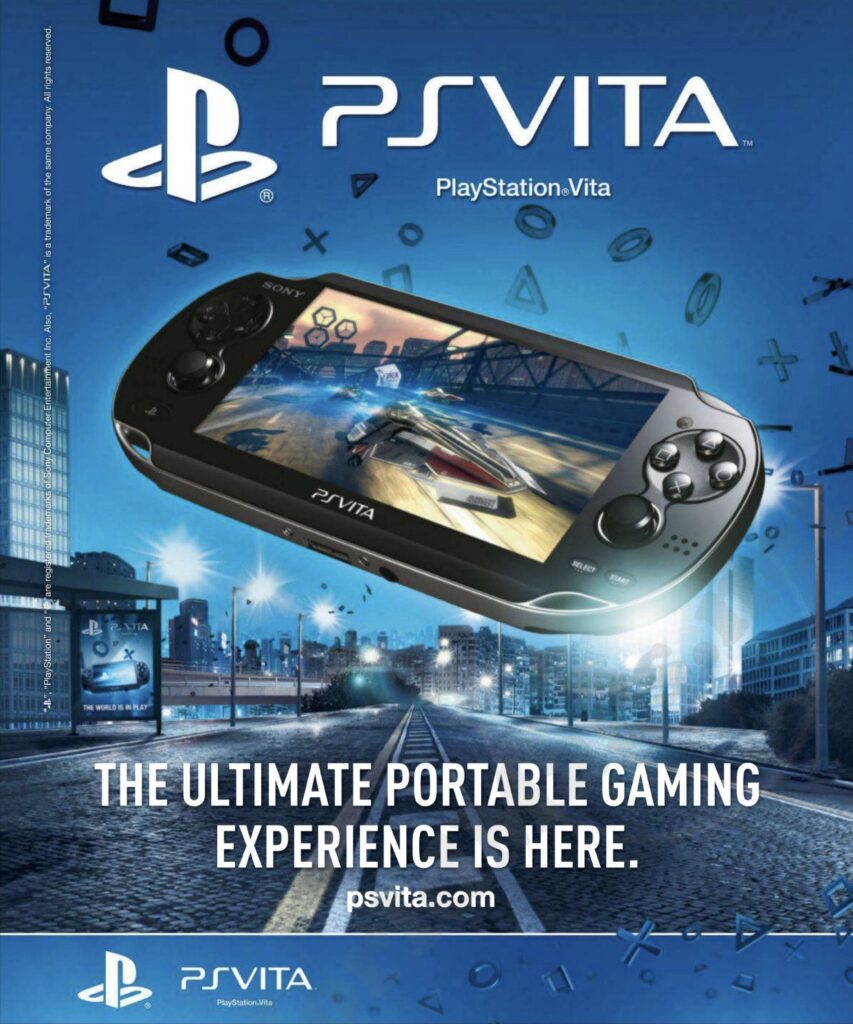
For the company’s next portable device, the PlayStation Vita, Sony faced an interesting crossroad. Now that mobile smartphones existed, where did a device like the Vita fit in? It still performed every function of the PSP; however, your iPhone or Android device handled those tasks better and without an expensive proprietary memory card. Indeed, Sony recognized this market shift as the Vita’s release approached. Instead of focusing on the Vita as an all-in-one entertainment device, marketing portrayed the Vita as a way to take home-console-style gaming on the go.
Sony Basically Made a Phone Without the Phone
Hardware-wise, the Vita was a unique device. Launching with an exclusive AT&T partnership, the Vita allowed gamers to connect to AT&T’s 3G network. This enabled networked gaming and connectivity apps on the go without a Wi-Fi connection. This functionality placed the device squarely in the same space as smartphones, and the hardware directly supported this comparison. Other Vita features—such as both front and back-facing cameras, a high-fidelity touchscreen, and access to streaming services—pushed the device into direct competition with smartphones.
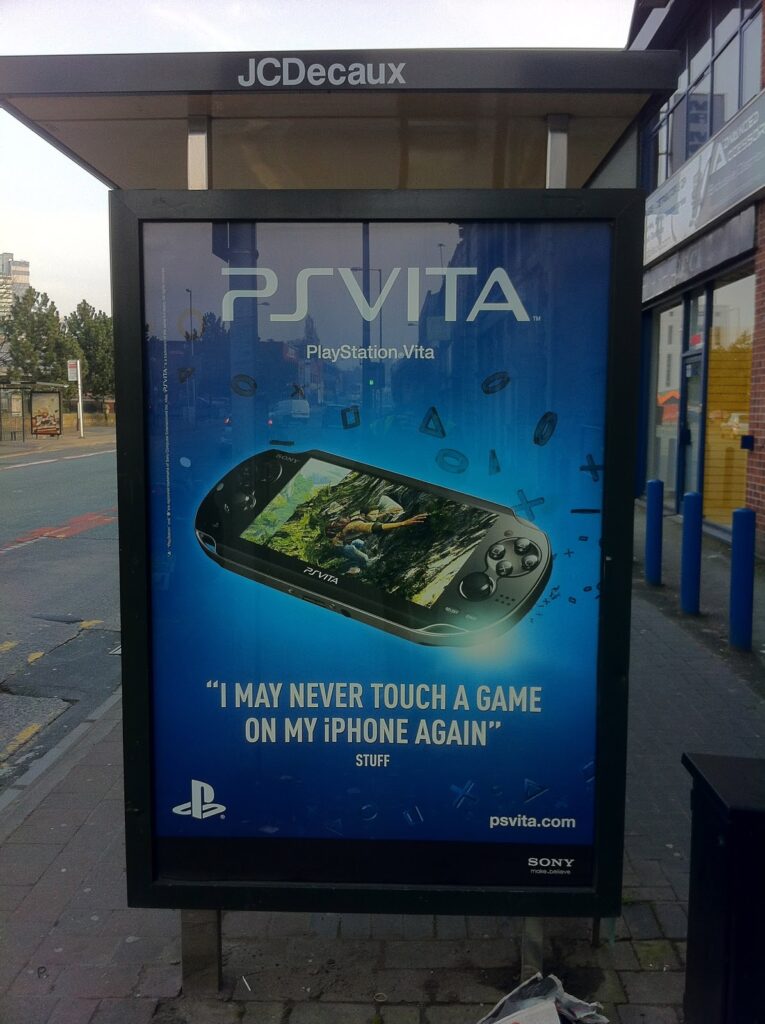
However, smartphones did not yet feature hardware compatibility with other devices. Sony’s extensive catalog includes high-end TVs, best-in-industry cameras, laptops, and smartphones. Sony felt they could potentially stand out from the smartphone market by making the PS Vita more than a gaming device. It could serve as an interface for other Sony products: the ultimate Sony accessory. However, as development progressed, Sony’s marketing team realized this was not a primary selling point. Consequently, the strategy of positioning the Vita as the center of a hardware ecosystem fell by the wayside.
The Mysterious Port on Top of the Vita
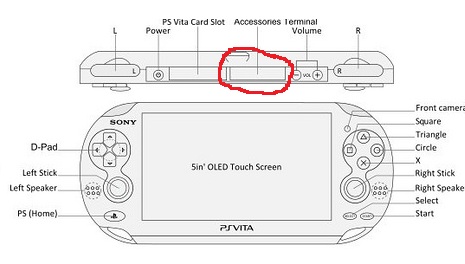
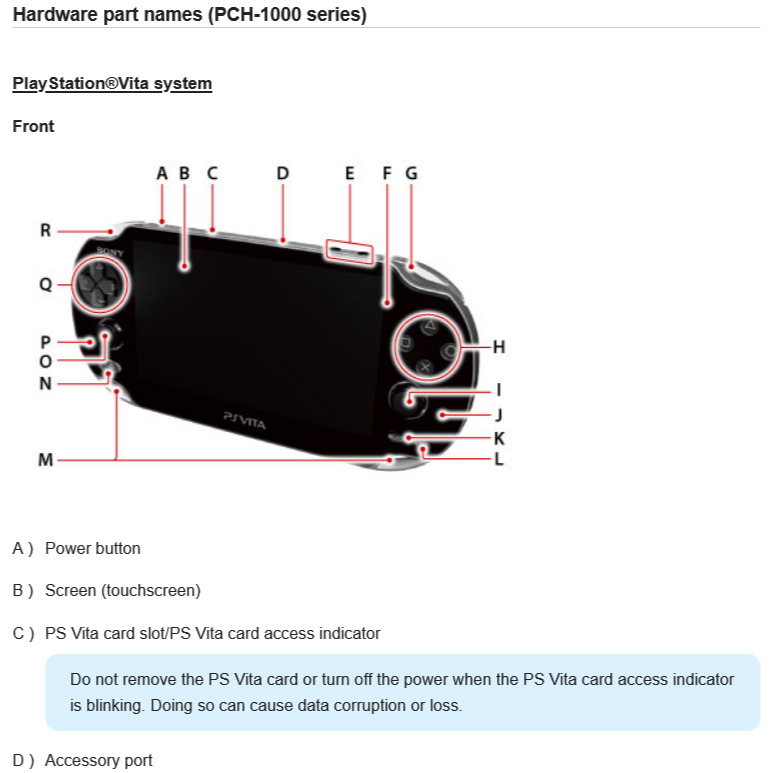
Each I/O port on a PlayStation Vita is proprietary. There is no USB port; even the charging cable is unique. On top of the PlayStation Vita, next to the game card slot, sits a mysterious port. No known accessories or cables connect to it. Sony only acknowledged the port during an old GDC presentation. In a PowerPoint detailing the hardware, Sony labeled the connection simply as an “accessory port” and showed a hypothetical link to a Sony camera. However, this same presentation omitted the front and back-facing cameras, implying that Sony added the cameras to the hardware in later revisions.
Observers assume that Sony intended this mysterious port for a camera accessory before they built cameras into the hardware itself. If that is the case, Sony likely included the port for one of two reasons: they anticipated other hardware connections, or they had already finalized the motherboard design when the company pivoted to internal cameras. In the latter scenario, removing the port would have cost more than leaving it. Regardless of the reason, Sony removed the port in later hardware revisions of the PlayStation Vita.
Was the PS Vita Ever Meant to Be Dockable like the Nintendo Switch?
For years, rumors suggested the port functioned as a video-out port, allowing the Vita to connect to a TV for big-screen play—much like the Nintendo Switch would do years later. Amateur engineers began experimenting with the port to prove or disprove the theory. They discovered that the port likely lacked the capability for video output in this manner. The mysterious port connected to a segment of the motherboard that would have throttled video data, making it inefficient for the task compared to a direct connection to the main video drivers.
Instead, hardware breakdowns indicate the port supported Sony’s original strategy of using the Vita as a second screen for other hardware. For example, connecting the Vita to a Sony digital camera could allow the device to function as a viewfinder or a touchscreen for adjusting photography settings that a traditional camera’s small screen and physical controls might make difficult.
Hardware blogger GodmanGen put this theory to the test. He discovered a specific cable included with a Sony-branded camcorder that was only available in a limited number of models. Although the cable came in the box, the documentation provided no insight into its purpose. This cable fit the mysterious port on the PlayStation Vita perfectly. Interestingly, when a user plugs the camera into the Vita, the device continues to function normally, but the Vita’s system reads the Wi-Fi as disabled even though it still works. After several minutes of being plugged in, the PlayStation Vita crashes.
The PS Vita Port Mystery May Never Be Solved
Unless more engineers and architects involved in the Vita project step forward, we will likely never know the true intention behind the mysterious port on top of the PlayStation Vita. Its interaction with camera devices lends credence to two possibilities: Sony intended it as a second screen for PlayStation-branded cameras, or it served as the connection for a Vita-branded camera that Sony eventually built into the hardware. Until someone reveals the truth, the port remains one of gaming’s biggest unsolved mysteries.
